Projects
Zero Plastic at University of Vavuniya: Bottle Cap Counting and ABC Match for Grade 1
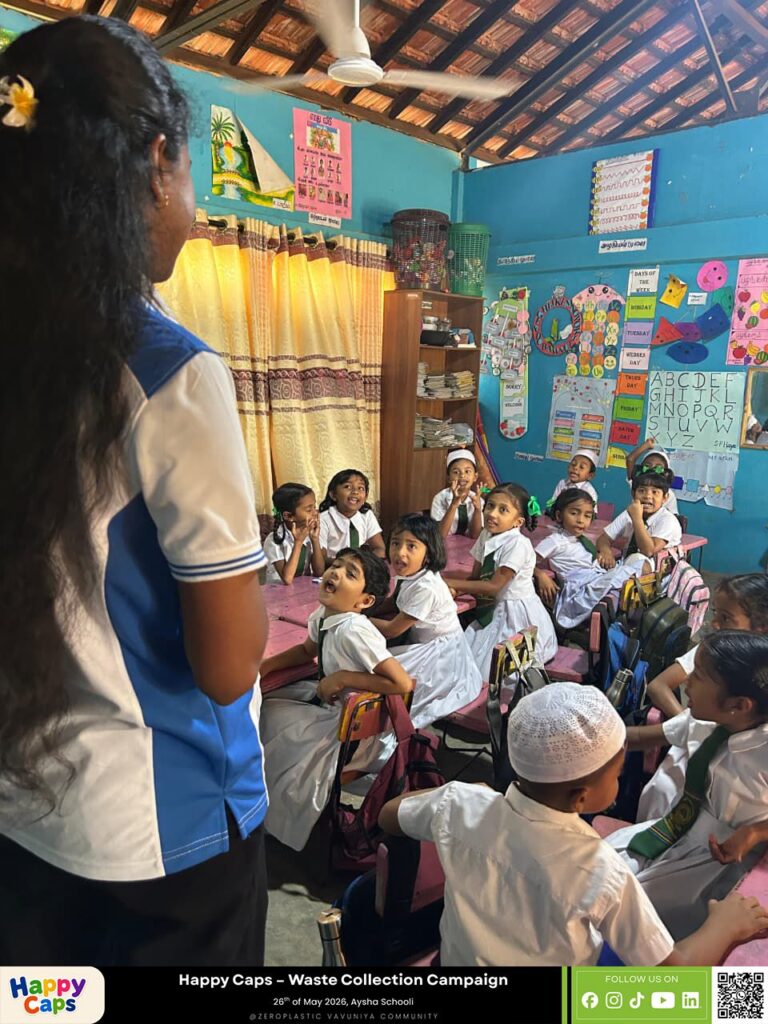
Bottle Cap Counting and ABC Match Game: Engaging Grade 1 Learners in Zero Plastic Action
At Aysha School, a hands on learning session used recycled plastic bottle caps to teach counting and alphabet recognition to Grade 1 students. Led by Mary Rengel Sosai and Thilaksana in partnership with the University of Vavuniya, the activity combined playful pedagogy with an environmental message under the Zero Plastic initiative.
The session used simple, low cost materials and multimedia support. Pictures shown on the smart board introduced the concept and inspired the children. Students then used bottle caps to place the correct number of caps on number charts and to match letters written on caps with corresponding letters on a learning board. Teachers, parents and school staff guided the activities and encouraged active participation.
Educational outcomes were clear and measurable. The activity strengthened early numeracy by reinforcing counting through tactile practice. Letter recognition improved as students matched caps to alphabet targets. The exercise also supported memory, hand eye coordination and collaborative learning through group work and guided practice.
The initiative delivered environmental learning alongside academic skills. By reusing bottle caps, students were introduced to practical ways to reduce plastic waste and to think creatively about reuse. The activity framed environmental stewardship as an everyday habit, making sustainability tangible for young learners.
Community engagement was a key success factor. The combined effort of teachers, parents, school staff and the University of Vavuniya created a supportive learning environment and amplified the project impact. That collaboration demonstrated how small resourceful interventions can mobilize a school community around learning and sustainability goals.
As a replicable model, the Bottle Cap Counting and ABC Match Game is well suited to other schools seeking low barrier, high impact activities. It requires minimal materials, aligns with early years learning objectives and embeds environmental values in classroom practice. Educators can adapt the activity to different age groups, extend it with counting challenges or letter games, and pair it with simple waste reduction campaigns at school.
The Aysha School activity shows that creative reuse of everyday materials can deliver strong learning gains while fostering environmental responsibility. Simple, well guided classroom activities can build foundational skills and contribute to a broader culture of sustainability in local communities.
#ZeroPlastic #EnvironmentalEducation #Reuse