Projects
University of Ruhuna Environmental Photo Contest – Winners and Most Popular Photograph Revealed
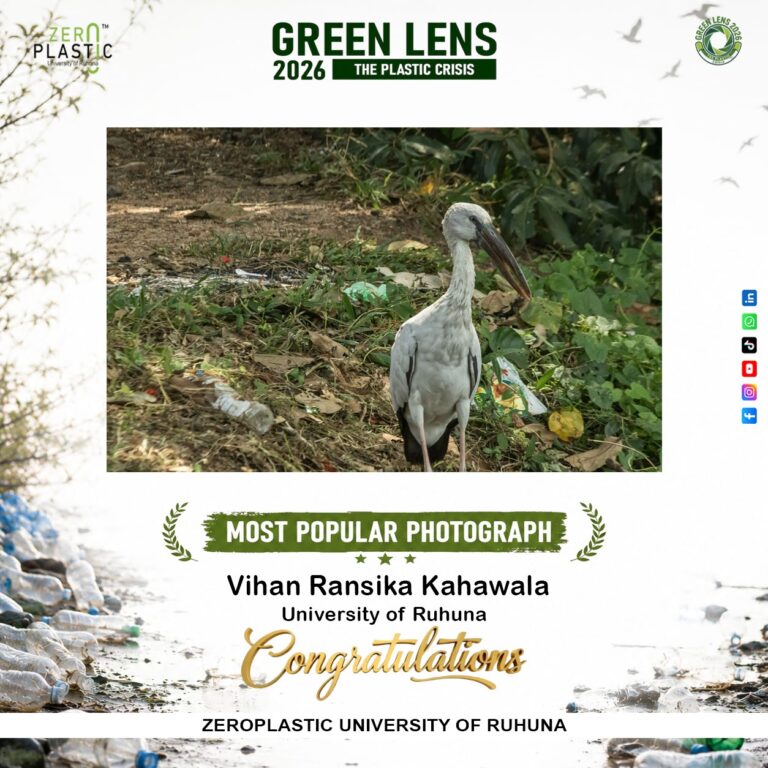
Green Lens 26: University Photography Contest Highlights Plastic Pollution and Mobilizes Student Voices
Green Lens 26, organized by the University of Ruhuna Organizing Committee with judging by the InfoCur Community of the Faculty of Science, convened university students across Sri Lanka to document plastic pollution and broader environmental crises through photography. Launched as an internal competition at the University of Ruhuna, the project expanded to universities countrywide to increase participation and impact.
The competition ran as an online photography campaign with a clear public awareness objective: to use visual storytelling to make environmental risks visible and to engage young people in conservation discourse. The marketing campaign began on 25 May 2026 with a Coming Soon flyer, followed by social media content and short videos that encouraged entries and public engagement.
Seventeen photographs were submitted by students from the University of Ruhuna, the University of Peradeniya, and the University of Jaffna. To broaden engagement and give the public a voice, a Most Popular Photograph was chosen through voting on the club Facebook page. Photograph No. 16 by Vihan Ransika Kahawala received the most likes and comments and was recognized as the Most Popular Photograph.
Judging and Winners
The InfoCur Community served as the official judging panel, assessing submissions for visual impact, storytelling clarity, and relevance to environmental themes. The judges awarded the top prizes as follows:
- First Place: P. G. Nethmi Kaveesha, University of Peradeniya
- Second Place: Subagya Wanasinghe, University of Peradeniya
- Third Place: Thayaharan Lenard Joel, University of Jaffna
This recognition celebrates both technical skill and the ability to communicate urgent environmental messages to a broad audience.
Impact and Reach
Beyond awarding prizes, Green Lens 26 achieved measurable awareness outcomes. The competition turned photographic submissions into a platform for dialogue on plastic pollution, encouraging viewers to interpret visual evidence and reflect on personal and collective responsibility. Public voting on social media increased the project reach and invited community participation in environmental conversation.
For participants, the event offered an opportunity to develop craft and advocacy skills while connecting with peers from other universities. For the wider public, the curated collection of images served as an accessible entry point into discussions about environmental degradation and possible solutions.
Organization and Support
The project was implemented by a structured Organizing Committee consisting of project managers, coordinators, content and design contributors, and a video editor. The competition received sponsorship and support that enabled promotion and prize recognition, and the InfoCur Community provided independent evaluation to ensure credibility.
Conclusion and Next Steps
Green Lens 26 demonstrated how student led initiatives can amplify environmental issues and foster cross university collaboration. The contest transformed images into a catalyst for awareness and community engagement, illustrating the role of creative media in conservation advocacy. Future editions could expand partnerships, include workshops on environmental photography and storytelling, and explore exhibition formats to sustain momentum.
Join the movement: #GreenLens26 #PlasticPollution #UniversityOfRuhuna #SaveOurPlanet