Artisan · Blog · Projects
Coconut Shell Bowl Making in Sigiriya: How Visitors from the US Learned Why the Coconut Tree Is Called the “Tree of Life”

A Coconut Shell Experience That Explains More Than Craft
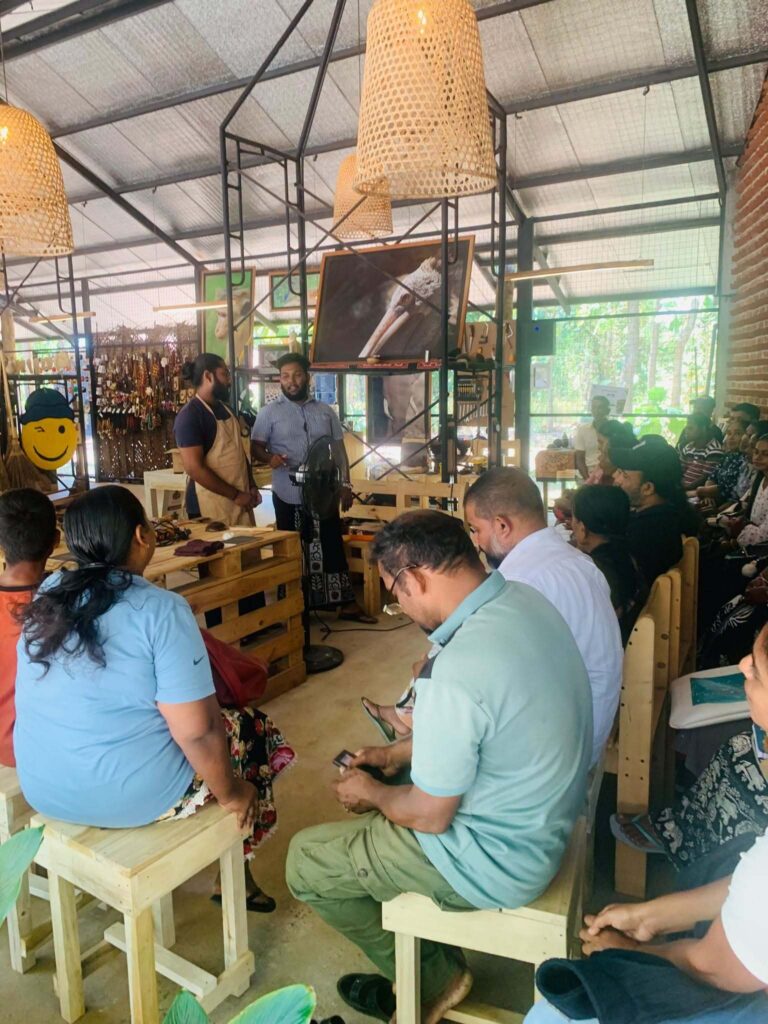
A group of visitors from the United States, travelling with Aitken Spence, recently stopped by the Impact Center by ZeroPlastic in Sigiriya for a coconut shell experience with a story attached to it. Along with shaping their own coconut shell bowls, they learned why the coconut tree is often called the “Tree of Life” in Sri Lanka, a name that reflects how many parts of daily life the tree has traditionally supported.
For travelers looking for things to do in Sigiriya beyond sightseeing, this kind of craft workshop offers a direct, hands-on way to understand local culture rather than simply observing it from a distance.
Why the Coconut Tree Is Called the Tree of Life
In Sri Lanka, the coconut tree is valued because so many of its parts can be used, from the fruit and its water to the husk, fibre, leaves and shell. During the workshop, visitors were introduced to this idea directly, connecting a familiar tropical tree to everyday items that many Sri Lankan households have relied on for generations.
Understanding this background gives context to the craft itself. A coconut shell is not simply a discarded piece of fruit. It is a natural material that can be cleaned, shaped and turned into something functional and long-lasting.
The Connection to Reducing Plastic Dependence
Bowls, containers and household items made from coconut shell are a reminder that useful, durable objects do not have to come from plastic. In many homes, plastic products have gradually replaced items that were once made from natural, reusable or repairable materials. Craft experiences like this one do not ask travelers to reject plastic outright, but they do offer a chance to see a practical alternative that already exists within local tradition.
When visitors shape their own coconut shell bowl, they are not just making a souvenir. They are engaging with a small, tangible example of how natural materials can serve the same purpose as mass-produced plastic items, often with less waste at the end of their life.
Local Skills, Local Knowledge
Craft workshops like this one also depend on local knowledge, the kind that is usually passed down rather than written in a manual. Learning how to work with coconut shell, understanding its texture and limits, and shaping it into something usable is a skill that connects visitors to Sri Lankan craftsmanship in a direct way.
For travelers interested in a genuine village experience in Sigiriya, this kind of learning matters. It shifts the visit from watching a demonstration to actively taking part, guided by people who understand the material and the culture behind it.
Why This Matters for Responsible Travel in Sri Lanka
Sustainable tourism in Sigiriya is not only about visiting natural sites responsibly. It also includes how travelers spend their time and who benefits from that spending. Choosing a craft experience that supports local skills and uses natural materials is one practical way visitors can align their travel choices with the values of plastic reduction and community support, without requiring any dramatic lifestyle change during their trip.
Experiences like this also encourage a broader respect for local resources. Seeing how much use can come from a single coconut tree naturally invites travelers to think about consumption and reuse in their own lives, even after they return home.
Visit the Impact Center by ZeroPlastic in Sigiriya
The coconut shell bowl workshop is one example of how the Impact Center by ZeroPlastic in Sigiriya brings together craft, culture and environmental awareness. Travelers curious about this experience, or about other craft activities connected to plastic reduction and local livelihoods, can learn more directly through the Impact Center by ZeroPlastic website.