Projects
හරිතාභිෂේක’26 Sparks a National Student Debate on Plastic
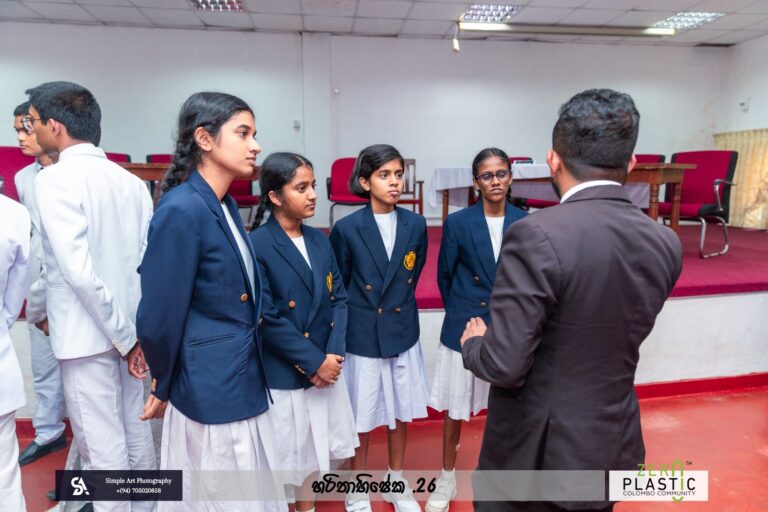
When Students Took the Stage to Challenge a Plastic-Dependent World
Inside a lecture hall at the University of Colombo, a teenager from a rural school stood at the podium, voice steady, arguing that Sri Lanka’s dependency on single-use plastic was not just an environmental crisis but a failure of imagination. Across from her, a student from a Colombo school countered with economic realities, citing the livelihoods tied to plastic manufacturing. The audience leaned in. This was not a rehearsed classroom exercise. This was හරිතාභිෂේක’26, and the stakes felt real.
A Debate Competition with a Deeper Purpose
හරිතාභිෂේක’26 is an All Island Inter-School Debating Competition organized by ZeroPlastic Colombo Community, the University of Colombo chapter of ZeroPlastic Movement. The project was designed with a specific mission: to promote awareness around the reduction of plastic usage and to encourage young people to think critically about sustainable alternatives to plastic and polythene.
Rather than lecturing students about plastic pollution through conventional workshops or poster campaigns, the organizers chose a format that demanded something more from participants. Debating required research. It required understanding opposing perspectives. It required students to sit with uncomfortable facts about how deeply plastic is woven into daily life in Sri Lanka and to articulate pathways forward.
Young Voices Confronting Real Problems
The competition brought together school students from across the island, connecting urban and rural communities through a shared platform. For many participants, this was their first opportunity to engage with the topic of environmental conservation not as passive listeners but as active voices shaping the conversation.
What made හරිතාභිෂේක’26 distinctive was its refusal to simplify. Students were not asked to repeat slogans about saving the planet. They were asked to weigh trade-offs, consider the circular economy, examine policy gaps and propose alternatives grounded in evidence. The format pushed them toward a deeper understanding of sustainability, one that acknowledged complexity rather than avoiding it.
For the university students who organized the event through ZeroPlastic Colombo Community, the project also represented a form of youth leadership. They managed logistics, coordinated with schools across the country and created a space where younger students could develop confidence alongside environmental literacy.
Why It Matters Beyond the Stage
Sri Lanka continues to grapple with mounting plastic waste, from clogged waterways to contaminated coastal ecosystems. Projects like හරිතාභිෂේක’26 address this challenge at its roots by shaping how the next generation thinks about consumption and waste. The competition aligns naturally with UN Sustainable Development Goals, particularly SDG 12 on responsible consumption and production and SDG 4 on quality education.
When that rural student stepped away from the podium, she had not solved plastic pollution. But she had done something perhaps equally important. She had learned to think about it clearly, argue about it persuasively and care about it deeply. That is the kind of change that outlasts any single event.