
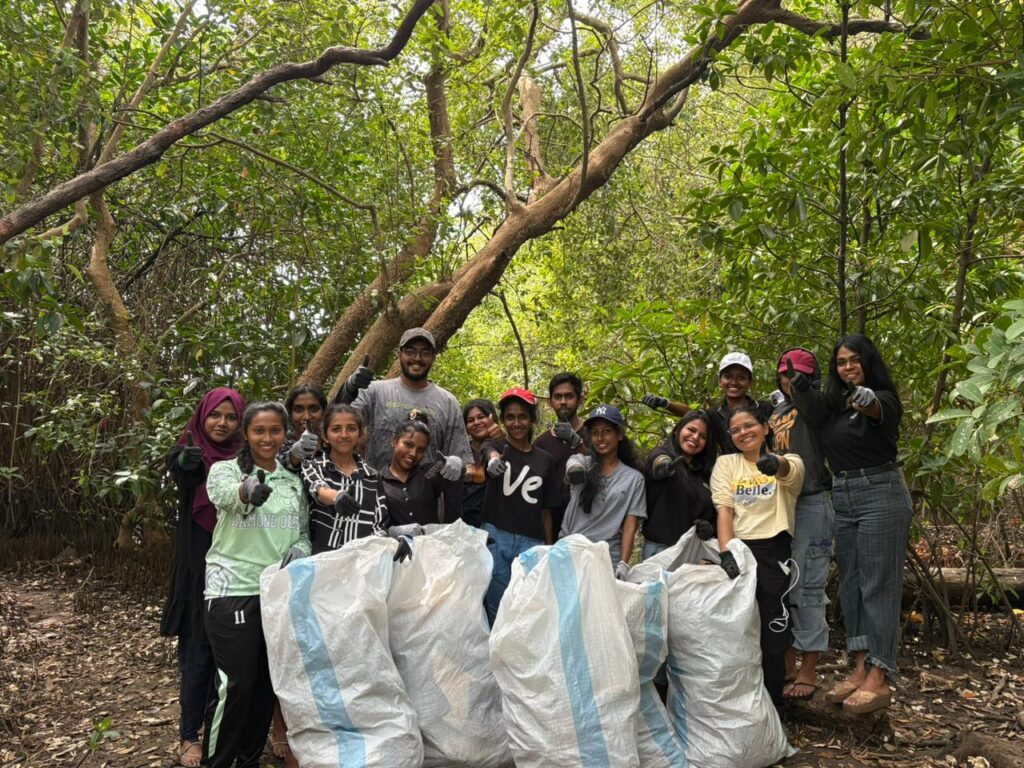
The “Blue Carbon Cleanse” was a youth-led environmental restoration initiative carried out at the Nara Kadolkale Mangrove Reserve in the Negombo Estuary, one of Sri Lanka’s most significant urban mangrove ecosystems. The project was jointly organized by the Zeroplastic National Institute of Social Development (NISD) Club and the G17 University Ambassadors Consortium, highlighting the impact of cross-institutional collaboration in addressing environmental and climate challenges.
Spanning nearly 14 hectares, the mangrove reserve plays a vital role in coastal protection, biodiversity conservation, and carbon sequestration, yet faces growing threats from plastic pollution, poor waste management, and land encroachment. To respond to these challenges, approximately 25 volunteers from NISD and G17 mobilized for a targeted cleanup operation, conducted under the scientific and technical guidance of Mrs. Nisansala from the National Aquatic Resources Research and Development Agency (NARA).
During the intervention, volunteers removed around 300 kg of polythene and mixed waste, focusing on clearing plastic trapped around mangrove pneumatophores, which are essential for tree survival. This action helped restore the ecosystem’s health and protect its capacity as a critical “blue carbon” sink.
Beyond ecological restoration, the project raised awareness of nature-based solutions for clean energy, linking mangrove health to SDG 7 (Affordable and Clean Energy). Participants learned how healthy mangroves reduce local temperatures, lower energy demand, and protect coastal energy infrastructure from storm and flood damage. Waste was also sorted to support recycling and waste-to-energy pathways, promoting circular economy principles.
Despite logistical challenges, strong youth leadership and institutional support ensured the project’s success. The initiative strengthened partnerships among youth networks, academic institutions, and national research bodies, creating a scalable model for future climate and conservation efforts.