
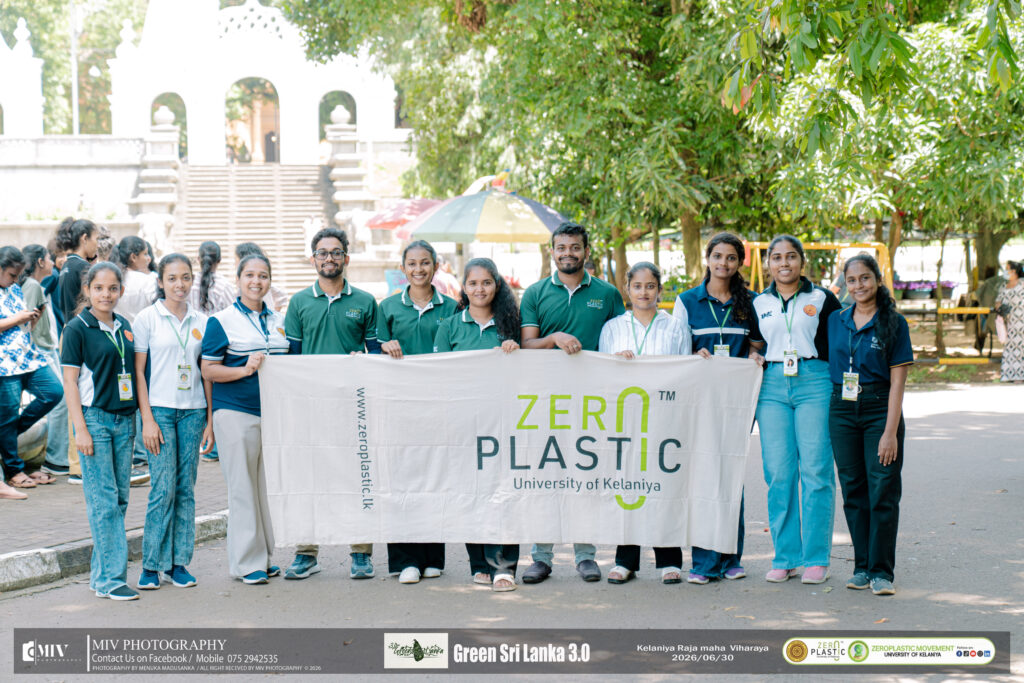
After the Devotees Left, the Volunteers Arrived
The morning of 30 June 2026 was still and warm at Kelaniya Raja Maha Vihara, one of Sri Lanka’s most sacred Buddhist temples. Just days earlier, thousands of devotees had gathered to mark Poson Poya, a celebration deeply woven into the island’s spiritual identity. But as the crowds thinned and the chanting faded, something else remained scattered across the temple grounds: plastic wrappers, food containers, discarded bottles and bags tangled in the roots of old trees.
That morning, a group of university students arrived not to pray, but to pick up what the celebrations had left behind.
A Temple Grounds Transformed
Project Green Sri Lanka 3.0 Phase 02 was organized by the Environmental and Educational Avenue of the ZeroPlastic Movement, based at the University of Kelaniya. The initiative was deliberately timed to follow the Poson Poya period, when the temple experiences one of its heaviest footfalls of the year. The goal was straightforward: collect and properly dispose of the waste generated by the large influx of visitors, and in doing so, restore the cleanliness and sanctity of the grounds.
Volunteers fanned out across the premises armed with gloves, bags and a shared sense of purpose. They worked through sections of the temple grounds methodically, sorting recyclable materials from general waste and ensuring proper disposal. For many of them, this was not their first cleanup. The project carried the “3.0 Phase 02” designation because it built on previous iterations, each one refining the approach and expanding the reach of responsible waste management practices at culturally significant sites.
More Than a Cleanup
What set this effort apart from a simple waste collection drive was its dual purpose. While the physical work focused on removing plastic pollution and restoring the temple environment, volunteers also engaged visitors and passersby in conversations about sustainable environmental practices. They encouraged people to think twice about single-use plastics, to carry reusable containers during religious visits and to take personal responsibility for the waste they generate.
This kind of community action at a beloved public space carries weight that classroom lectures rarely achieve. When young people are seen cleaning a place their elders hold sacred, the message lands differently. It becomes personal. It becomes about respect, not regulation.
The initiative aligns naturally with UN Sustainable Development Goals 11 and 12, which call for sustainable cities and communities and responsible consumption and production. By targeting waste at a site where environmental conservation intersects with cultural preservation, the ZeroPlastic Movement demonstrated that sustainability does not have to compete with tradition. The two can reinforce each other.
Building Habits, Not Just Headlines
For the student volunteers from the University of Kelaniya, the day was about something larger than a single event. It was about building a pattern of youth leadership in environmental stewardship, proving that collective action at the local level can shift attitudes over time. Each phase of the Green Sri Lanka project adds another layer to that effort, turning a one-day cleanup into a growing movement rooted in consistency and care.
The temple grounds were cleaner by the afternoon. But the more lasting outcome may be the quiet shift in how the next wave of visitors thinks about what they leave behind.