Projects
Yajna Initiative, University of Peradeniya Mobilizes 182 Volunteers to Clean Kattukalai Pillayar Kovil Thiruvizha, Collecting 54 Bags of Plastic Waste
Project YAJNA: University of Peradeniya and Community Unite for a Cleaner, More Sustainable Kandy
On 1 April 2026 Project YAJNA brought together a large student contingent and local residents for an intensive awareness and cleanup effort at Kattukalai Pillayar Kovil in Kandy. The initiative mobilized 182 volunteers from the University of Peradeniya for an awareness walk and targeted cleanup of the temple premises and surrounding streets during the festival period.
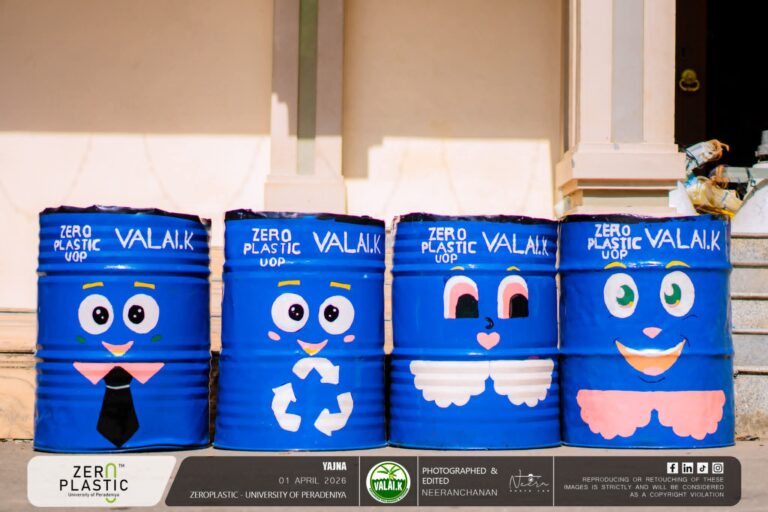
The team collected approximately 54 bags of plastic and polythene waste and implemented on site segregation to ensure proper disposal and recycling where possible. In addition to the cleanup, the project delivered four segregated dustbins for Paper, Plastic, Polythene and Glass, each accompanied by clear informational boards to guide correct use. These bins now provide a durable, visible tool for improved local waste management.
Project YAJNA combined direct action with public engagement. The awareness walk, conducted in Sinhala, Tamil and English, reached a broad audience along the main road and in temple areas. Clear, design focused messaging and volunteer-led conversations encouraged festival participants and passersby to reduce single use plastics and adopt simple waste separation habits.
The initiative was supported by Vaalai.K HOTEL Kandy. Local business sponsorship, student leadership and community participation created a collaborative model that turned a short term cleanup into a platform for long term behaviour change.
Impact highlights:
- 182 volunteers actively engaged in outreach and cleanup
- Approximately 54 bags of plastic and polythene waste removed from temple grounds and adjacent streets
- Four segregated dustbins with educational signage installed to support ongoing waste separation
- Multilingual awareness materials and a high visibility march that amplified the message across the city
Project YAJNA demonstrates how student groups can partner with local businesses and communities to deliver measurable environmental benefits during high activity events. The combination of cleanup work, infrastructure donation and focused public communication created immediate visible results while laying the groundwork for sustained improvements in waste management.
Next steps to scale impact could include a maintenance plan for the donated bins, follow up awareness sessions during future festivals, and documentation of best practices to help other campus groups replicate the model. Project YAJNA provides a clear example of practical, community centered action that reduces plastic pollution and strengthens local capacity for sustainable festival management.