
At University of Kelaniya, something unusual was taking shape—an initiative that blended mental wellness with environmental responsibility in a way the campus had never seen before. This was Project Trash Talk, the second major initiative by the Research and Development Avenue of the ZeroPlastic Movement, and it promised to change how students viewed both waste and wellbeing.
The project began with a simple but powerful realization: If plastic could burden the planet, could it also—when reimagined—help lighten someone’s heart?
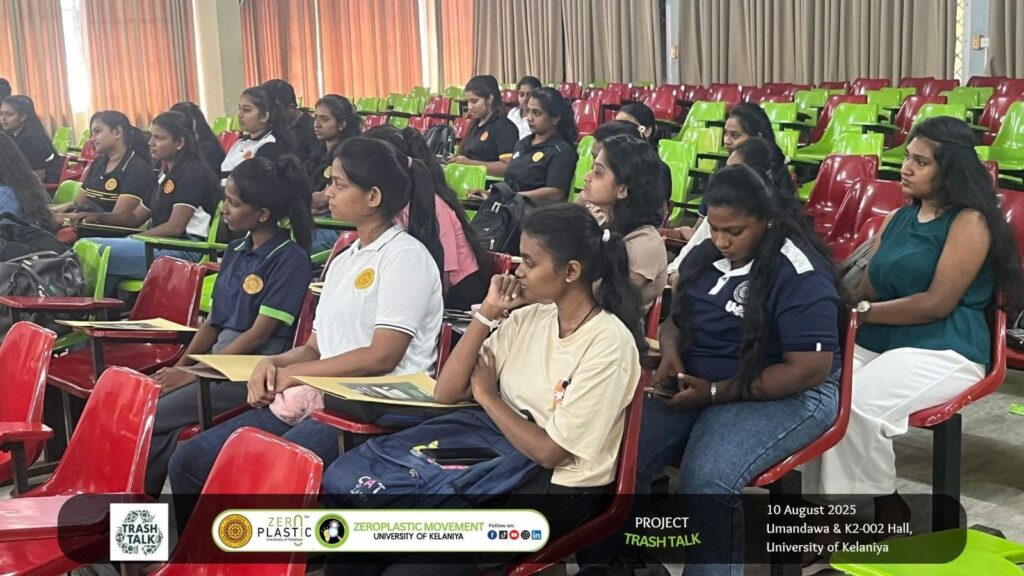
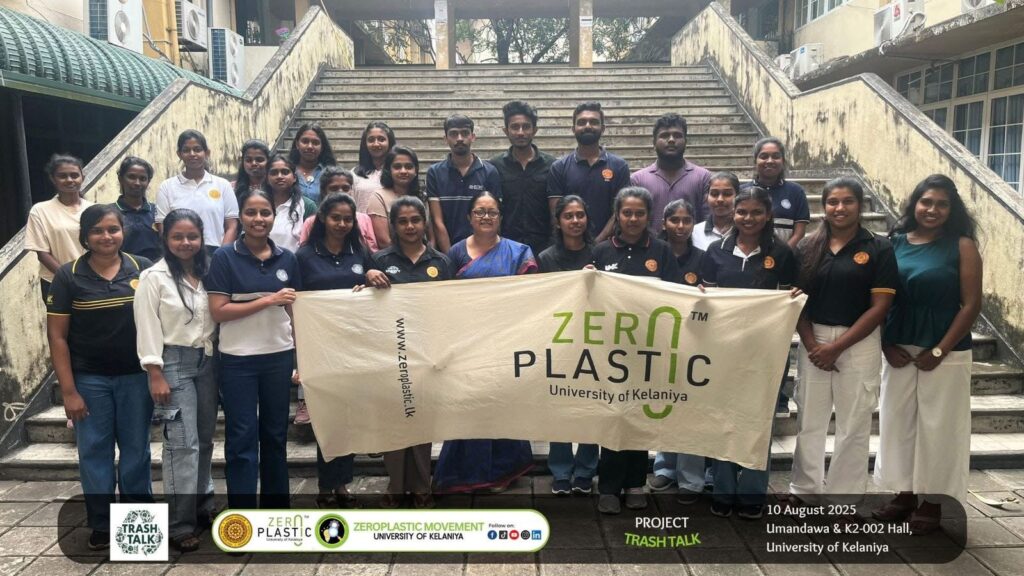
To explore this idea, the team turned to Kalana Mithuru Sewana, the university’s counselling unit. Together, they launched the first phase: The Mindshift Workshop, held on November 10th. Under the gentle guidance of Prof. Anusha Salwathura, former Director of Kalana Mithuru Sewana, undergraduates opened up about academic pressure, emotional struggles, and the quiet battles they carry through their days. Her words encouraged them to pause, breathe, and see their challenges from a kinder, more compassionate perspective.
But the project’s most unforgettable moment was yet to come.
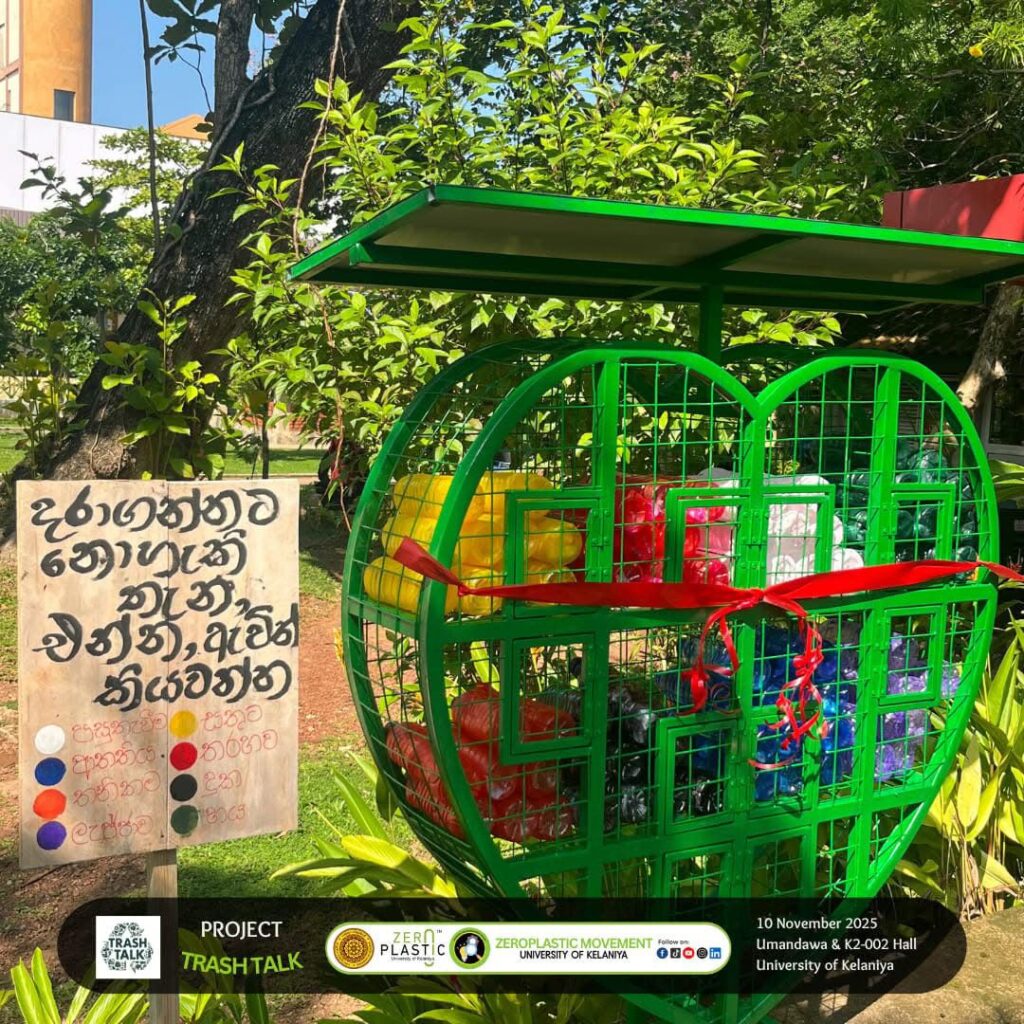
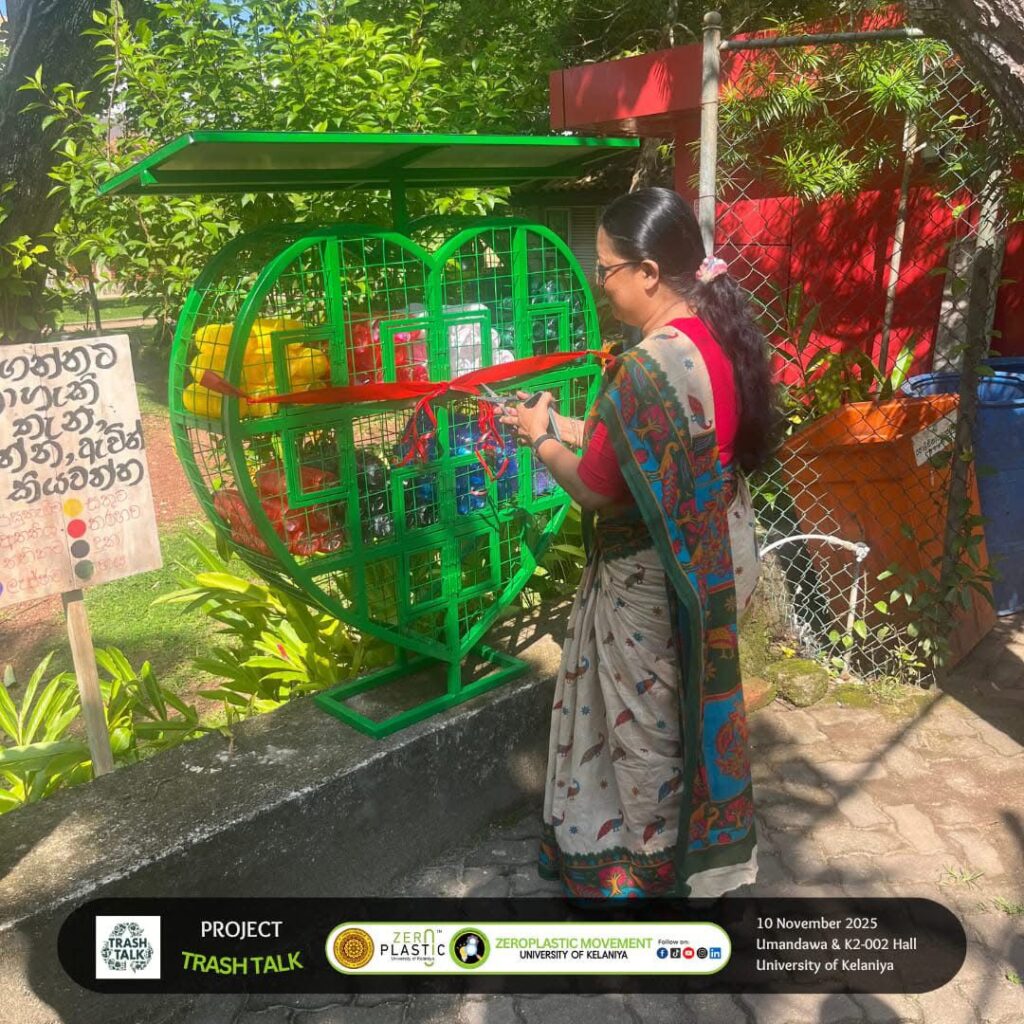
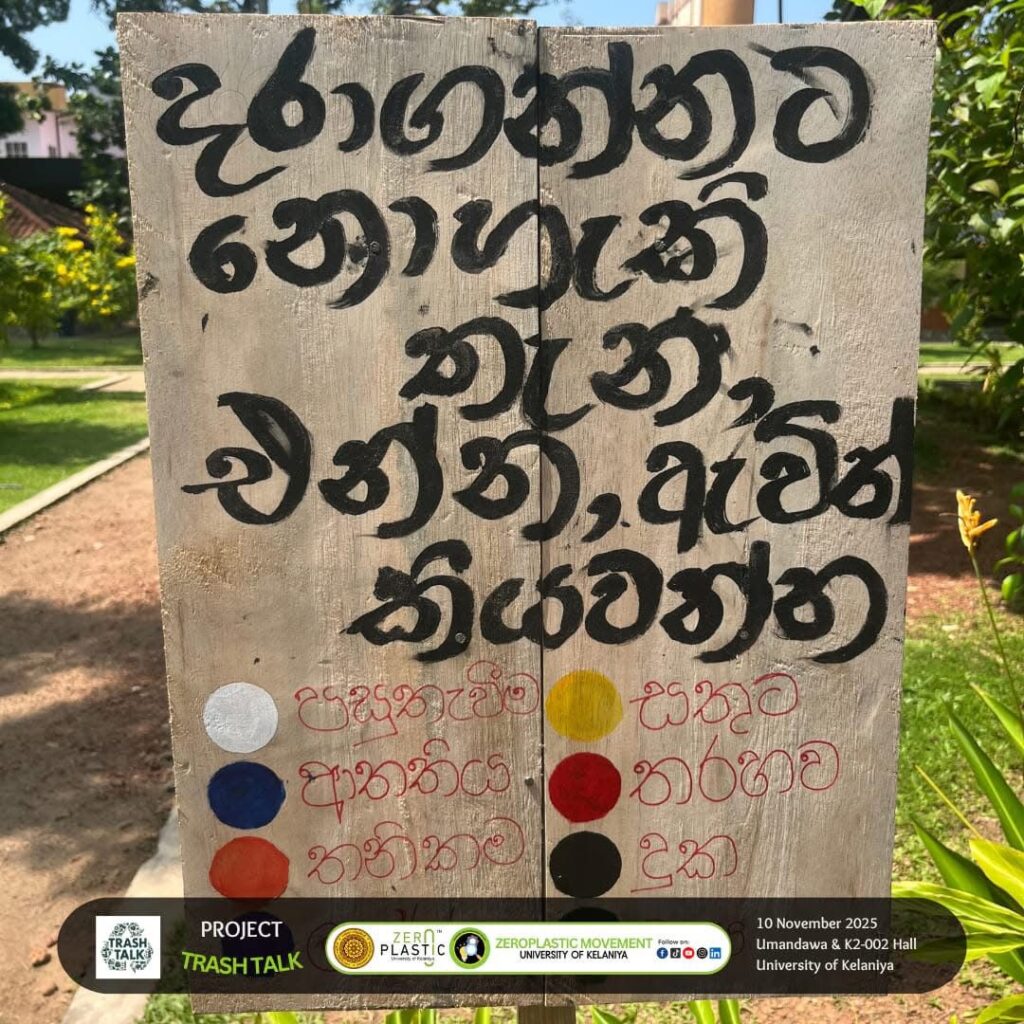
After the workshop, a heart-shaped installation appeared at Umandawa—a vibrant, interactive piece titled The Trash Talk Container. Made entirely from collected plastic bottles, it stood like a symbol of hope in the center of campus. Divided into eight emotional themes—stress, sadness, anxiety, happiness, and more—the container invited students to pick a bottle that reflected how they felt. Inside each bottle was a handwritten motivational note, lovingly crafted by undergraduates of the Psychology Unit.
Some notes offered comfort. Some offered strength. Some simply reminded students that they weren’t alone.
Another section of the container encouraged students to contribute ideas for creative recycling, turning environmental responsibility into a shared, ongoing conversation.
Every passing day, students stopped, reflected, and reached for these colourful bottles of encouragement—proof that even discarded plastic could carry new purpose.
Project Trash Talk didn’t just promote sustainability; it created a space for healing, connection, and creativity. It showed the university community that transformation—whether of plastic or emotion—begins with a single step, a single message, a single moment of care.
And in that heart-shaped container, countless moments like these continue to unfold.