
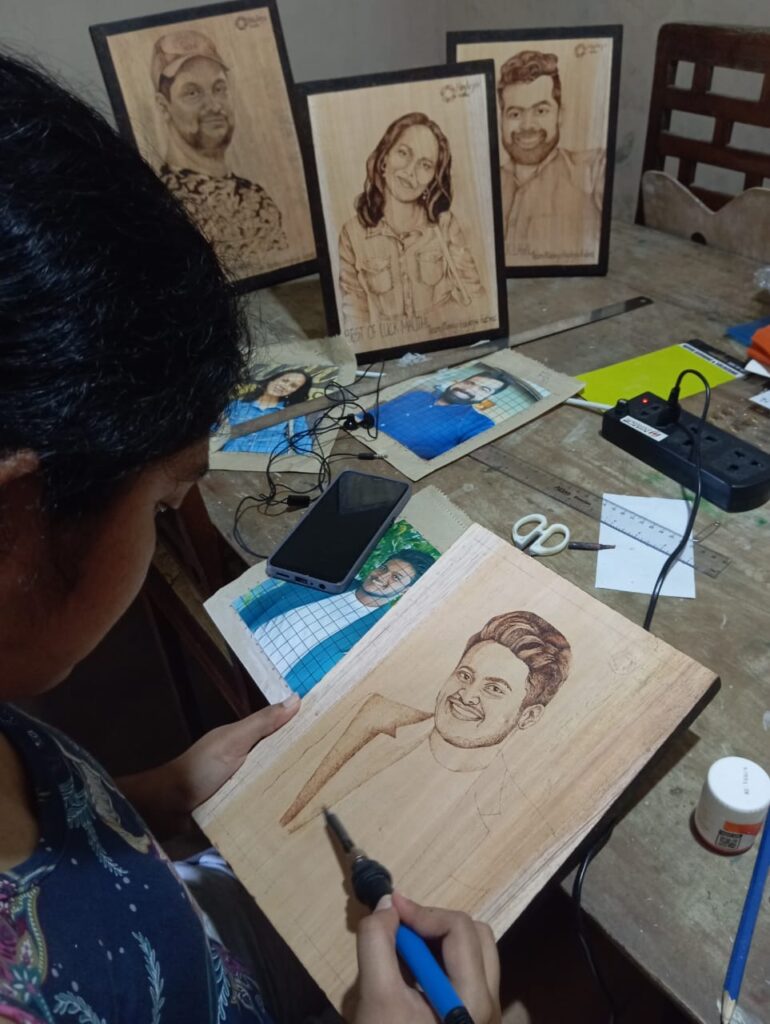
Three traditional Sri Lankan industries — wood carving, wood drawing, and brass work — share a common thread. They rely on the hands of skilled artisans who have inherited techniques passed down through generations. Yet many of these craftspeople operate in relative obscurity, their workshops tucked away in small towns, their customer base limited to whoever happens to walk through the door. Project Rise and Reach set out to change that by turning smartphone cameras toward these artisans and telling their stories through short-form video on social media.
The Problem Hiding in Plain Sight
Sri Lanka’s traditional craft industries face a quiet crisis. Younger generations are moving toward urban employment, and the artisans who remain often lack the digital literacy or resources to market their work online. A wood carver in a rural village may produce furniture of extraordinary quality, but without visibility beyond his immediate community, his income remains unpredictable. The brass worker who shapes intricate lamps and ornaments by hand competes with mass-produced imports that cost a fraction of the price. These businesses do not use plastic or polythene in their production processes, making them genuinely sustainable operations. But sustainability alone does not pay the bills. Without customers who know they exist, these artisans risk becoming the last generation to practice their craft.
Cameras in the Workshop
The Rise and Reach team visited workshops across the country, filming artisans at work. The videos were kept short, designed for platforms where attention spans are measured in seconds. But within those seconds, viewers could watch a block of wood transform under a carver’s chisel or see molten brass poured into a hand-carved mold. The goal was not to create advertisements. It was to document process and skill in a way that felt genuine. Each video focused on the human element: the concentration on a craftsman’s face, the rhythm of repetitive motion perfected over decades, the pride in a finished piece. The content was distributed across multiple social media channels to maximize reach and engagement among diverse audiences.
Why Short-Form Video Works for Small Business
Traditional advertising is expensive, and most small-scale artisans cannot afford it. Social media video eliminates that barrier. A well-made 60-second clip can travel farther than a newspaper advertisement ever could, and it costs almost nothing to distribute. The algorithm rewards content that holds attention, and handcraft processes are inherently watchable. People pause their scrolling to see how things are made. The Rise and Reach team capitalized on this natural curiosity. By showing rather than telling, the videos allowed the quality of the work to speak for itself. Comments and shares from viewers extended the reach of each post well beyond the initial audience, creating organic momentum that no paid campaign could easily replicate.
Preserving Craft Through Modern Tools
There is an irony in using digital technology to preserve analog traditions, but it is a productive one. The artisans featured in Rise and Reach are not opposed to modernity. They simply need modern tools to work in their favor. A wood drawing artist whose intricate designs reach thousands of viewers online gains not just potential customers but also cultural recognition. When people see the labor and skill involved in creating a single piece, their perception of its value changes. The project demonstrated that digital platforms can serve as bridges between traditional makers and contemporary consumers who value authenticity and environmental responsibility.
What Comes Next
The videos produced by Rise and Reach represent a starting point, not a conclusion. The artisans still face structural challenges: limited access to shipping infrastructure, inconsistent raw material supply, and the physical toll of manual labor as they age. Social media visibility addresses one piece of the puzzle, but long-term sustainability for these industries will require broader support, from local government investment to training programs that attract younger apprentices. Still, the project proved something important. When given even a small window of exposure, the work of these artisans resonates with people. The craftsmanship sells itself. It just needed someone to hold up a camera and press record. The rest was already there, shaped by hands that have been perfecting their art for a lifetime.