
Haritha Piyasariya: Community-Led Action to Tackle Plastic Pollution in Mawella
Haritha Piyasariya is a community-based environmental initiative implemented in Mawella village, Tangalle, to address persistent issues of improper waste management and plastic pollution. The project seeks to raise public awareness, discourage harmful practices such as open dumping and burning of plastic, and promote sustainable waste management behaviors across the village.
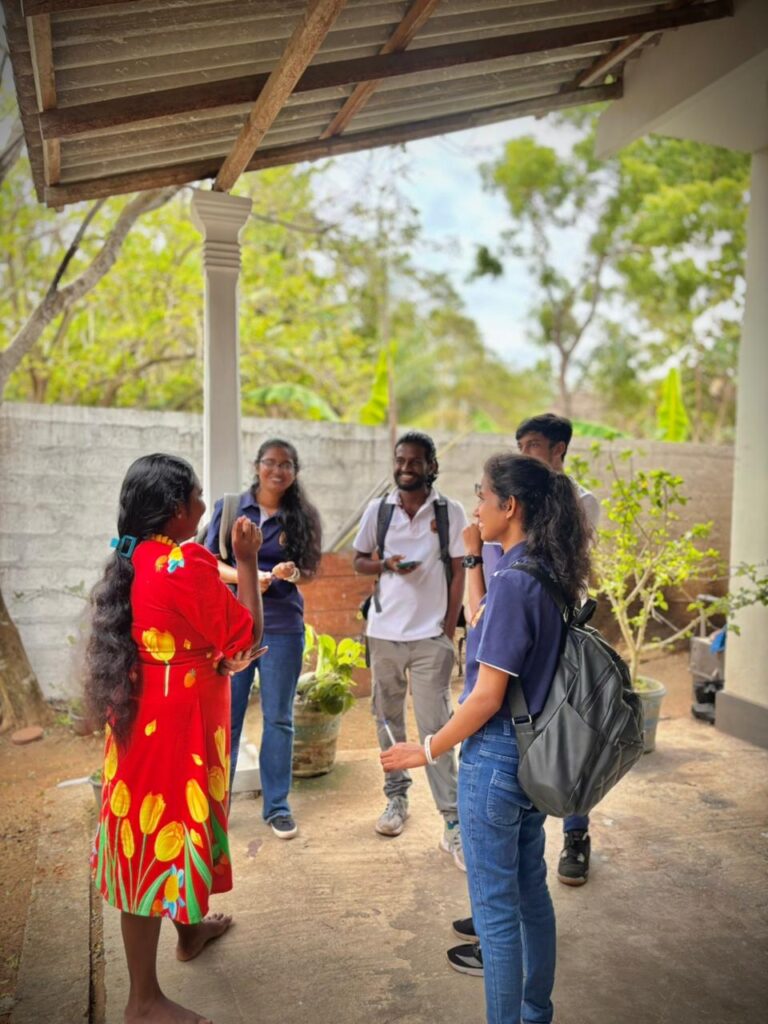
The initiative began with a comprehensive household and public-area survey carried out by a team of 21 University of Ruhuna students. Divided into small groups, the volunteers collected first-hand observations on local waste disposal practices and recorded types and sources of waste. This ground-level approach produced detailed, context-specific data to guide the next phases of the project.
Key observations from the survey highlighted widespread informal disposal practices and common sources of plastic waste. These findings are being used to design targeted awareness activities and cleanup operations that reflect local realities and community needs. By basing interventions on direct observation and resident input, the project increases the likelihood of durable behavioral change.
The project is organized in three phases: survey, awareness creation, and village cleanup. Having completed the survey phase, the team will move into awareness programs tailored for households, schools, and local stakeholders, followed by coordinated cleanup events to remove accumulated waste and reduce environmental hazards.
Haritha Piyasariya was sponsored and supported by the Prajava Grama Foundation with collaboration from local authorities and community members. Strong local partnerships have already contributed to smooth fieldwork and high volunteer engagement, demonstrating the value of multi-stakeholder cooperation for community-scale environmental action.
The volunteer and organizing teams combined practical fieldwork with communications, coordination, and documentation expertise. Organizing team members included Project Head K.M.G.G.D. Sandamali; content contributors Piyumi Maheshika and Thenu Botheju; media team members H.A. Chami Umesha and Nadeesha Dilrukshi; secretary Dulashini Wimalathissa and W. Madhushika Subhashini; event coordinators W.I. Madushani, B.A.I.V. Lakshitha, M.V.G.C. Sewmini, and M.G.R. Chandupa; and photographer R.M. Dinuka Kaushya Rathnayaka. The full list of participating volunteers reflects a broad student commitment to community improvement.
Impact and next steps: By grounding awareness and cleanup efforts in survey data, Haritha Piyasariya aims to reduce harmful disposal practices, increase recycling and proper waste separation, and improve public health and environmental quality in Mawella. The project offers a scalable model for other villages facing similar challenges by combining student-led research, local sponsorship, and community engagement.
Call to action: Continued support from local stakeholders, civil society partners, and volunteers will be essential for the awareness and cleanup phases. Stakeholders interested in learning more or supporting subsequent phases are encouraged to connect with the project organizers to help sustain momentum and amplify impact.