Every day on a university, small habits shape a much bigger impact. One of the most common is the use of polythene bags—picked up, used for a few minutes, and thrown away without much thought. Project Ban the Bag was created to question this routine and show that changing simple habits can lead to powerful environmental action.
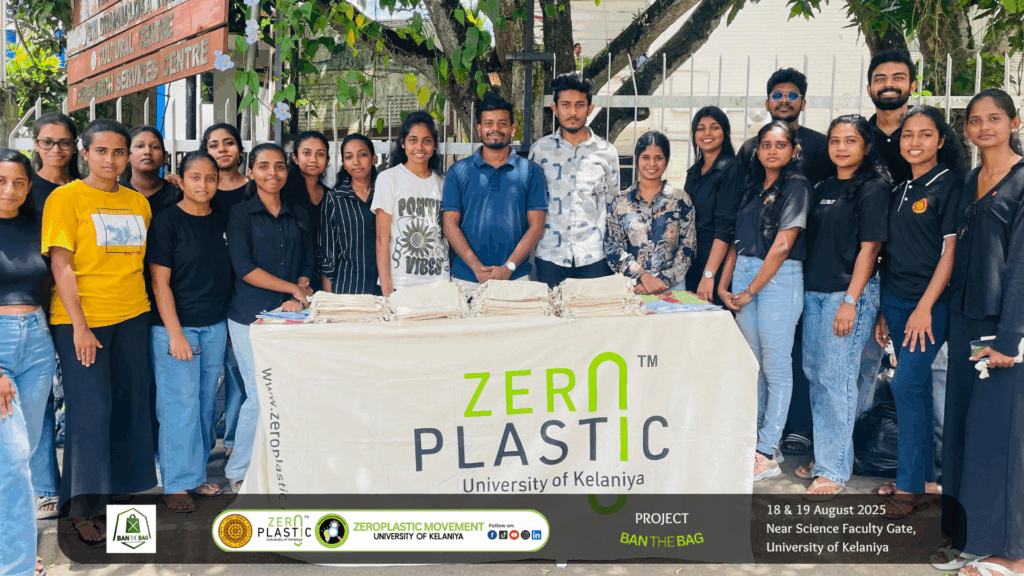
Led by the ZeroPlastic Movement through the Research and Development Avenue of the University of Kelaniya, the project focused on reducing polythene bag usage in university canteens while encouraging students to adopt more sustainable alternatives. From the start, the initiative combined awareness, research, and action to create meaningful change.
A team of undergraduate students conducted a detailed study on polythene usage across campus canteens. Their findings were compiled into a report and officially handed over to the Vice Chancellor, helping the university better understand the scale of the issue and supporting future sustainable decisions.
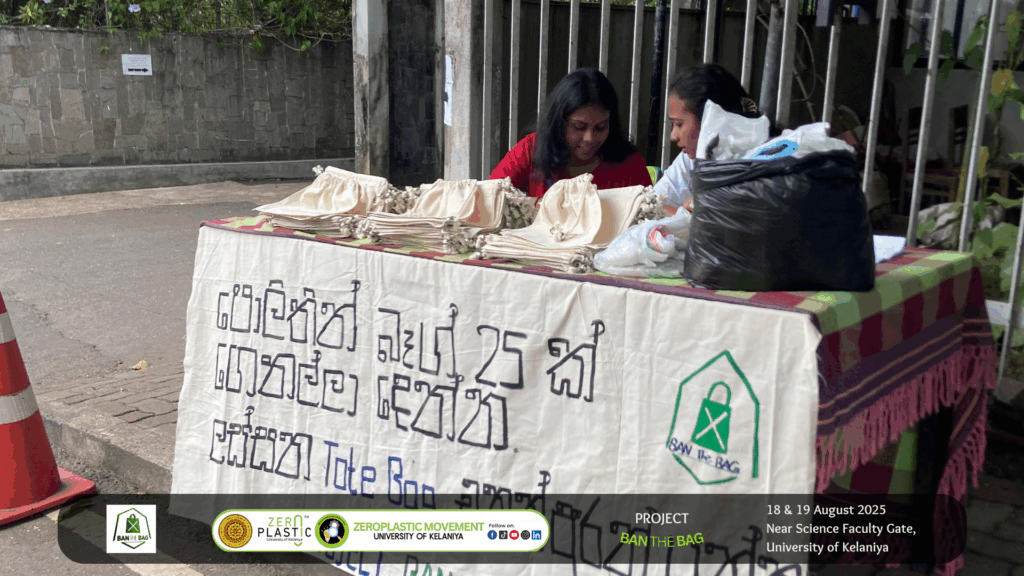
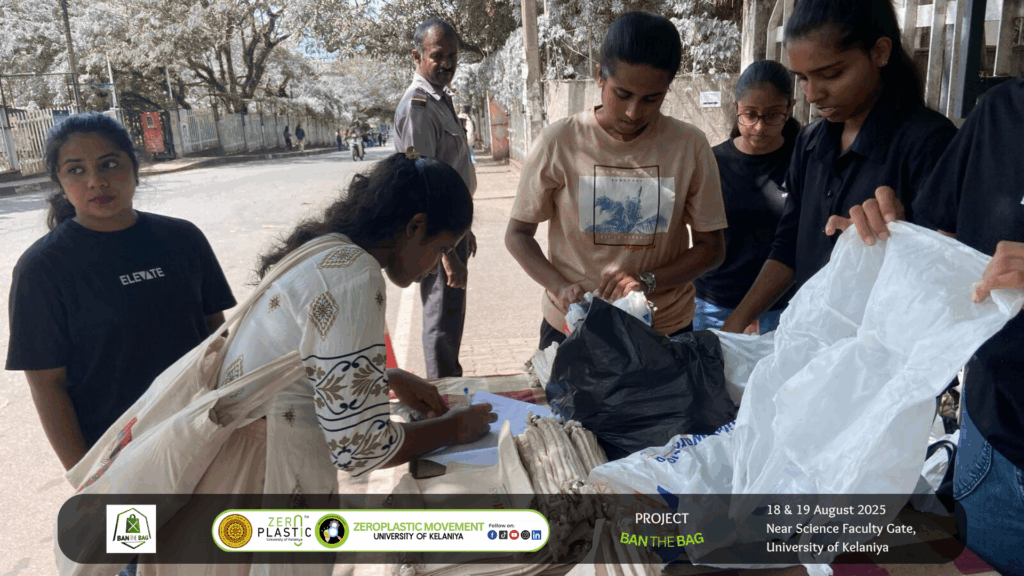
Awareness played a key role in driving impact. An online session held in June attracted over 170 participants, offering practical insights into the environmental harm caused by polythene and the importance of reducing single-use plastics. The conversation then moved offline, with on-ground activities held near the Science Faculty. Students were invited to exchange their used polythene bags for reusable tote bags—turning awareness into direct action.
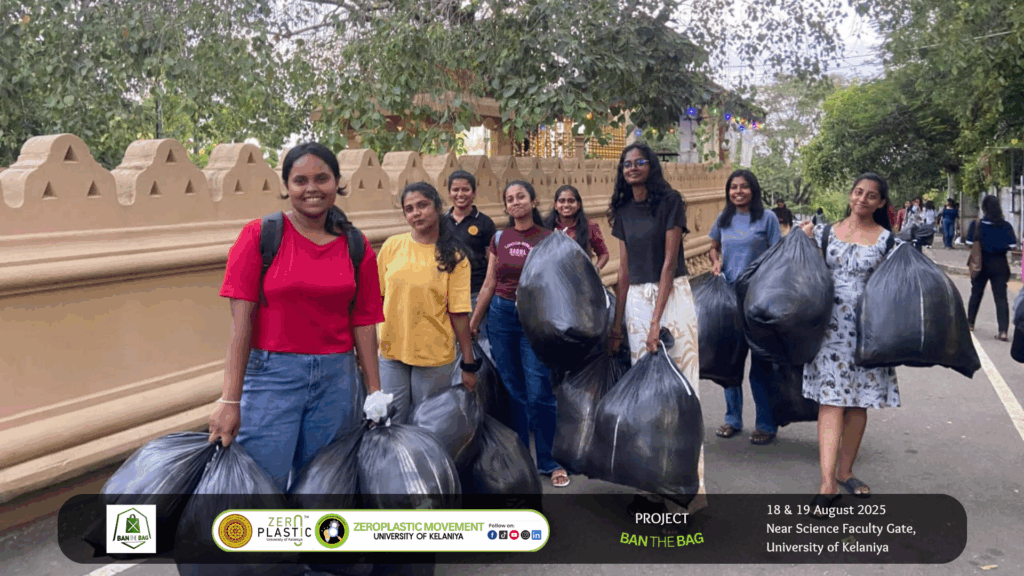
With support from MAS Holdings and a local entrepreneur, the project also strengthened eco-friendly business practices. Collectively, students helped collect more than 20,000 polythene bags while nearly 1,000 reusable tote bags were introduced as a greener alternative.
Project Ban the Bag proved that change doesn’t always start with big steps. Sometimes, it begins with a simple choice—and a campus willing to rethink its everyday habits.